The widespread lack of forestry site maps in Burgenland, Upper Austria, and Lower Austria necessitates a new approach to site exploration and mapping of existing forest sites. A particular challenge lies in considering future changes in climatic conditions, which will impact the classification of sites and the suitability of tree species. As part of the FORSITE II project, a dynamic forest typology is to be developed based on a GIS-supported geo-ecological stratification model. Existing geodata (e.g., elevation model, geological base map), available site and climate data, as well as newly collected parameters for the characterization and classification of the substrate overlaying hard and soft rock will serve as the data basis.
For the forest type map, thematic maps for the factors climate zone, water balance, and nutrient balance will first be modeled based on point and area data. These will then be combined into forest types with uniform factor combinations. The model will allow stratification of forest types across all major forest sites based on digital geo-ecological parameters derived from the data foundations (e.g., elevation level, slope position, substrate, terrain form, inclination). Each forest type will be represented on the forest type map at a scale of 1:25,000. Tree species suitability will be derived based on heat, water, and nutrient availability. In addition to the ecological characterization, each forest type will include information on suitable tree species and site-specific risks. Possible treatment options in the context of climate change will be described separately for forest groups based on previous experiences with existing tree species and their mixtures. Recommendations for future stocking and management in light of climate change will also be provided.
Objectives of AP2:
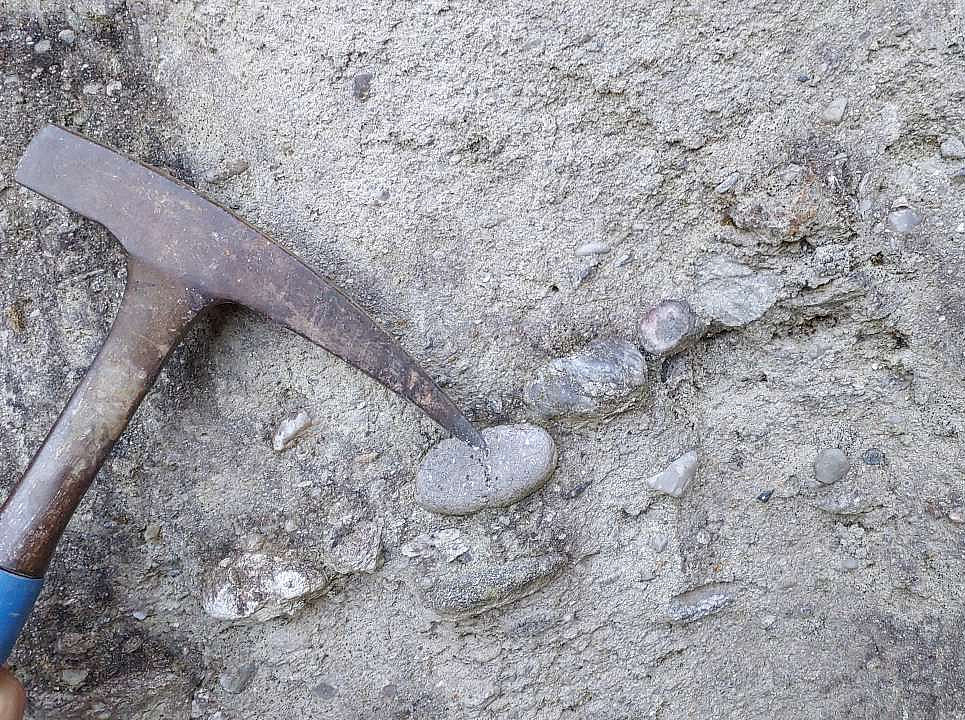
- Provision of geological maps with substrate information for areas of hard rock and soft rock as a basis for the regionalization of soil properties.
- Mineral-chemical and soil-physical classification of unconsolidated rock using the ALPECON-WLM system.
- Information on the properties of substrate and hard rocks regarding water and nutrient balance as a basis for regionalization and modeling.
Research partners: BOKU, BFW, AlpEcon, MJP, ZAMG, GBA, WLM (kursiv= innerhalb AP2)
Team
| +43 316 380 - 8729 Institut für Erdwissenschaften |
| +43 316 380 - 8725 Institut für Erdwissenschaften |
| +43 316 380 - 8726 Institut für Erdwissenschaften |