



Alpine hydrology is characterised by seasonal snow accumulation in winter, followed by rapid melt in spring. Karst systems, meanwhile, are notoriously difficult to characterise, and seasonal snowmelt may offer a way to constrain their internal dynamics. The large volume of water held in the seasonal snowpack carries a distinct stable water isotope signature, set at the moment of precipitation. This signature makes stable water isotopes an effective natural tracer for following water through a system. However, processes such as sublimation and melt alter the isotopic composition of the snowpack over the course of the season (from snowfall to infiltration). We aim to identify which processes alter the seasonal snowpack's isotopic composition, and to determine the resulting isotopic signal of the meltwater itself.
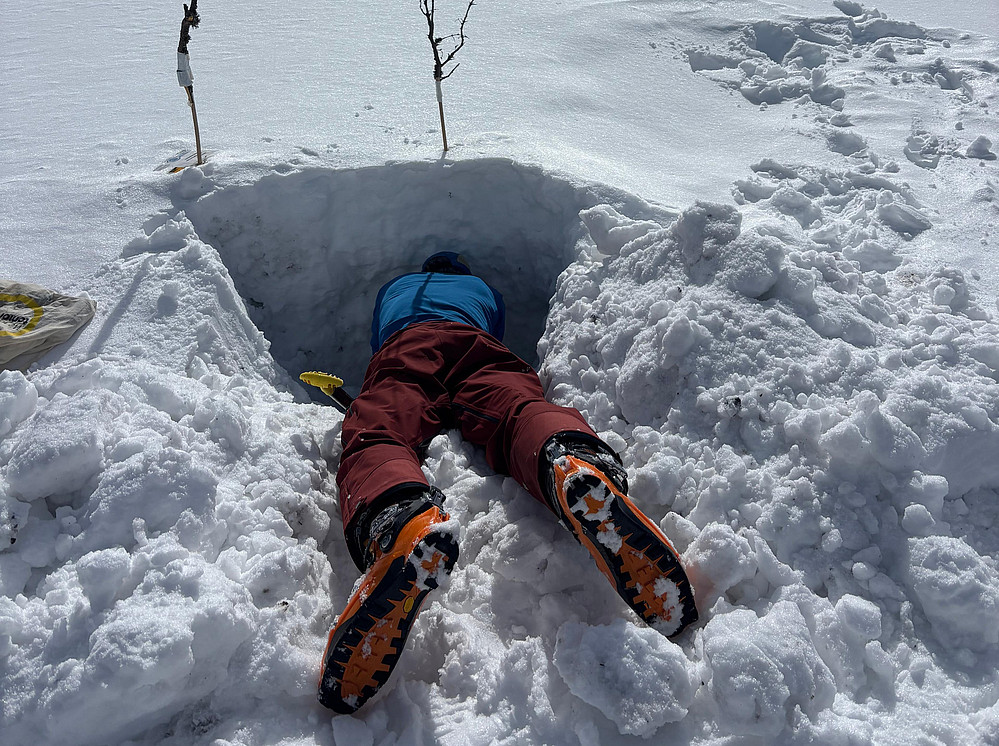
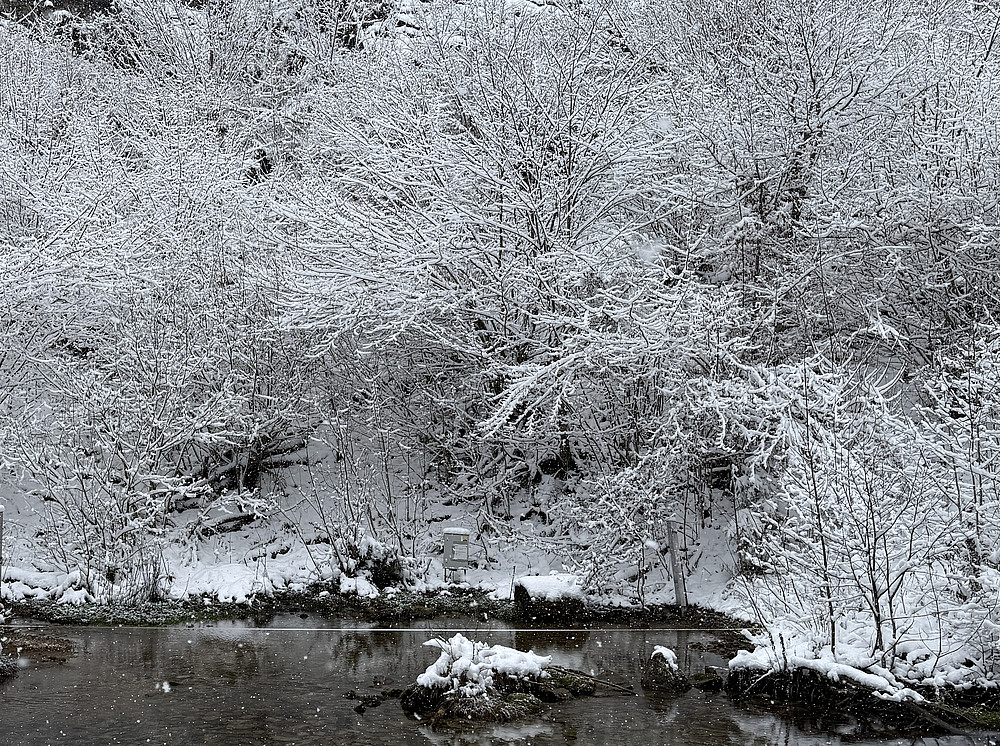
This meltwater in turn recharges karst springs. Our research focuses on the Etzbach, a complex karst spring with multiple smaller outlets in the Johnsbach valley. Because we have a well-constrained input signal — the isotopic composition of the snowmelt — we can quantify the discharge behaviour of both the individual outlets and the spring system as a whole. This work therefore combines high-resolution sampling of snow and snowmelt across the allogenic catchment with high-resolution sampling of the karst springs themselves.
Team

MSc Jasper Lammers
Dipl.-Ing. Dr.rer.nat. Thomas Wagner

BSc MSc Martin Masten
Partners
| | |
| +43 316 380 - 8295 Institut für Geographie und Raumforschung Mi 14 bis 16 Uhr bzw. nach Vereinbarung |
|
Funding
